Lippert Slide-Out Problems: Common Issues and How to Fix Them
Lippert slide-out systems power the majority of RVs on the road today — and when they develop problems, the symptoms are recognizable. Here is a practical guide to the most common Lippert slide-out issues, what causes them, and what it takes to fix them correctly.
Lippert Components — sold under the Lippert and Schwintek brand names — manufactures the slide-out systems found in the majority of towable and motorized RVs built in the last two decades. If you own an RV with a slide room, there is a very good chance it runs on a Lippert system. That is good news when it comes to parts availability and service support. It also means that when something goes wrong, the failure patterns are well-documented and, in most cases, entirely fixable.
This guide covers the most common Lippert slide-out problems, what causes them, how to recognize them, and what a proper repair involves. If your slide room is not moving, moving unevenly, making noise, or leaking, you are in the right place.
How Lippert Slide-Out Systems Work
Before diagnosing a problem, it helps to understand the two main Lippert slide-out architectures.
Rack-and-pinion systems use a motor-driven gear that engages a toothed rack mounted to the slide room. These are found on older and mid-range coaches and are known for their durability under heavy loads. The motor, gearbox, and rack are all serviceable components.
Schwintek in-wall systems use a pair of motors mounted inside the wall cavity, driving a worm gear that moves the room along a track. These are common on newer coaches and lighter slide rooms. They are more compact but also more sensitive to alignment and track condition.
Both systems share a control board, a wiring harness, and a switch or touchpad interface. Problems can originate at any point in that chain — mechanical, electrical, or both.
The Most Common Lippert Slide-Out Problems
1. Slide Room Will Not Move at All
This is the most alarming symptom, and it has a wide range of causes — not all of them serious.
Start with the basics before assuming a major failure:
- Check the coach battery voltage. Slide-out motors draw significant current, and a battery below 12.2 volts may not provide enough power to move the room. Charge the batteries fully and try again.
- Inspect the fuse or circuit breaker for the slide circuit. A blown fuse is a common and easily overlooked cause of a completely dead slide.
- Check for a lockout switch. Many coaches have a manual lockout that prevents slide movement during transit. If it was accidentally engaged, the room will not respond to any command.
- Look for an obstruction. Something as simple as a chair leg, a piece of luggage, or debris on the floor track can prevent movement and trigger a motor shutdown.
If none of these resolve the issue, the problem is likely in the motor, the control board, or the wiring harness — all of which require a technician to diagnose properly.
2. Slide Room Moves Slowly or Unevenly
A slide that moves but does so sluggishly, jerks, or extends unevenly on one side is a warning sign that should not be ignored. Continuing to operate a misaligned or struggling slide accelerates wear on the motor, gears, and track.
On rack-and-pinion systems, uneven movement often points to a worn or damaged gear, a bent rack section, or a motor that is losing torque. On Schwintek in-wall systems, uneven movement — where one side of the room leads the other — is one of the most common failure modes. The two motors are supposed to stay synchronized through the control board. When one motor weakens or the track on one side develops resistance, the room skews in its opening.
A skewed Schwintek slide is a time-sensitive repair. The more the room travels out of square, the more stress it places on the wall framing, the slide seals, and the motors themselves. Catching it early keeps the repair straightforward.
3. Slide Room Gets Stuck Partway
A slide that stops mid-travel — either extending or retracting — and will not complete its movement is a frustrating and potentially trip-ending problem. Common causes include:
- Motor thermal cutout. Slide motors have a thermal protection circuit that shuts them down if they overheat. This can happen if the motor has been working hard against resistance — a misaligned room, a stiff seal, or a partially obstructed track. Let the motor cool for 15 to 20 minutes and try again. If it moves briefly and stops again, the underlying resistance needs to be found and corrected.
- Control board fault. The Lippert control board monitors motor current and will stop the slide if it detects an overload condition. A board fault code can often be read with a diagnostic tool, which tells a technician exactly what the board saw before it shut down.
- Mechanical obstruction in the track. Debris, a bent track section, or a worn roller can create a hard stop at a specific point in the travel. The location of the stop often points directly to where the obstruction is.
4. Grinding, Clicking, or Squealing Noises
Unusual sounds during slide operation are almost always mechanical in origin and should be investigated before they become a more serious failure.
Grinding typically indicates gear wear — either the drive gear on the motor or the rack teeth are worn enough that they are no longer meshing cleanly. On Schwintek systems, grinding can also indicate that the worm gear is damaged or that the track is contaminated with debris.
Clicking during operation often points to a loose fastener, a worn roller, or a component that is making intermittent contact with something it should not be touching.
Squealing is most commonly a lubrication issue. Lippert slide systems require periodic lubrication of the rack, rollers, and track. In Florida's heat and humidity, lubricant degrades faster than in cooler climates, and a dry track will announce itself with a high-pitched squeal. This is one of the easiest maintenance items to address — and one of the most commonly neglected.
5. Slide Room Leaks Water
Water intrusion around a slide room is not a slide-out mechanical problem — it is a seal problem — but it is worth addressing here because it is one of the most common complaints Lippert slide-out owners bring to a shop.
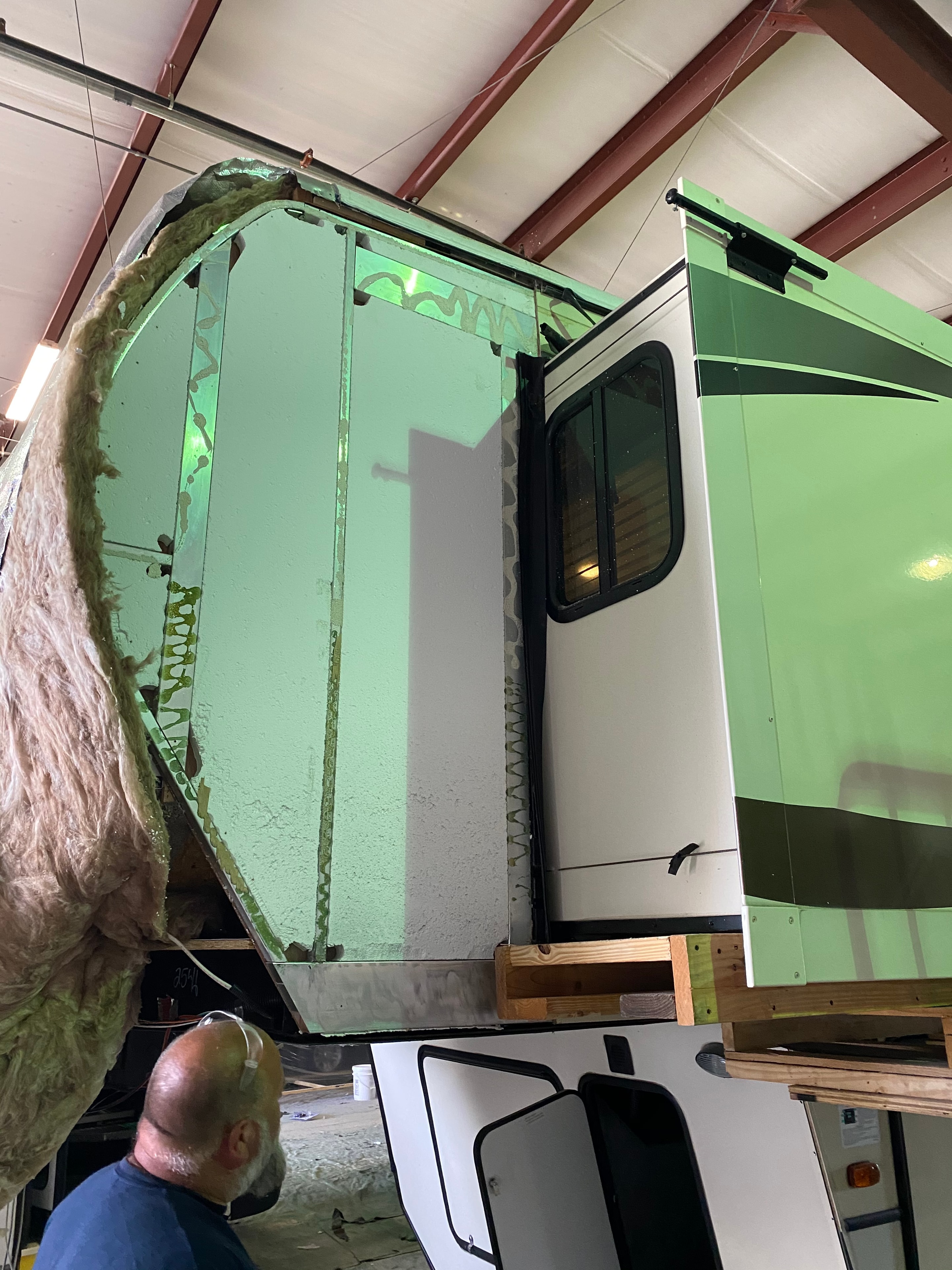
The rubber seals that surround the slide opening compress against the room when it is retracted and flex when it is extended. Florida's UV exposure and heat cause these seals to dry out, crack, and lose their ability to form a watertight barrier. Once a seal fails, water enters the wall cavity surrounding the slide opening — one of the most difficult areas to dry out and one of the most expensive to repair if the damage is allowed to spread.
Signs of seal failure include water stains on the floor or walls near the slide, a musty smell in the slide room area, or visible cracking and pulling away of the rubber seal material. Seal replacement is a relatively affordable repair when caught early. The water damage restoration that follows a neglected seal failure is not.
6. Slide Room Will Not Retract Fully
A slide that extends normally but will not retract completely — leaving a gap between the room and the coach wall — is a common issue with a few distinct causes.
On rack-and-pinion systems, a worn or damaged end-stop can allow the room to travel past its intended retracted position, or a gear issue can prevent it from reaching that position at all. On Schwintek systems, the room may stop short of full retraction if the motors lose synchronization or if the track is obstructed near the retracted end.
This matters beyond aesthetics. A slide room that does not fully retract may not seal correctly, which means water intrusion risk on the road. It may also prevent the coach from being safely towed or driven if the room protrudes past the coach wall.
7. Control Board and Wiring Faults
The Lippert control board is the brain of the slide system. It interprets switch inputs, monitors motor current, manages synchronization on dual-motor systems, and stores fault codes when something goes wrong. Board failures are less common than mechanical issues but do occur — particularly on coaches that have experienced water intrusion near the board or that have had wiring issues that sent voltage spikes through the system.
Symptoms of a control board problem include:
- The slide does not respond to any switch input, even after confirming power and fuses are good
- The slide moves in one direction but not the other
- The room behaves erratically — moving without input or stopping at random points
- Fault codes that do not correspond to any obvious mechanical problem
Diagnosing a control board fault requires the right diagnostic equipment and familiarity with the Lippert system. Replacing a board without confirming it is actually the failed component is an expensive mistake — the underlying cause of the board failure (a wiring short, water intrusion, or a motor drawing excessive current) will destroy the new board just as quickly.
The Manual Override: What to Do When You Are Stuck
Every Lippert slide-out system has a manual override that allows you to move the room without power. On rack-and-pinion systems, this is typically a hex drive on the motor shaft that can be turned with a drill or a hand tool. On Schwintek systems, the override is a hex fitting on each motor.
Knowing where your manual override is and how to use it before you need it is one of the most practical things an RV owner can do. If your slide gets stuck at a campsite and you need to retract it to drive home, the manual override is your first option. Your owner's manual will have the specific procedure for your coach — or ask a technician to walk you through it during your next service visit.
Why Lippert Authorization Matters for Slide-Out Repair
Lippert provides technical training, OEM parts access, and diagnostic support to authorized service centers. That authorization is not just a marketing credential — it means the technicians working on your slide have been trained on Lippert's specific systems, have access to the diagnostic tools Lippert provides, and can source genuine replacement components rather than aftermarket substitutes.
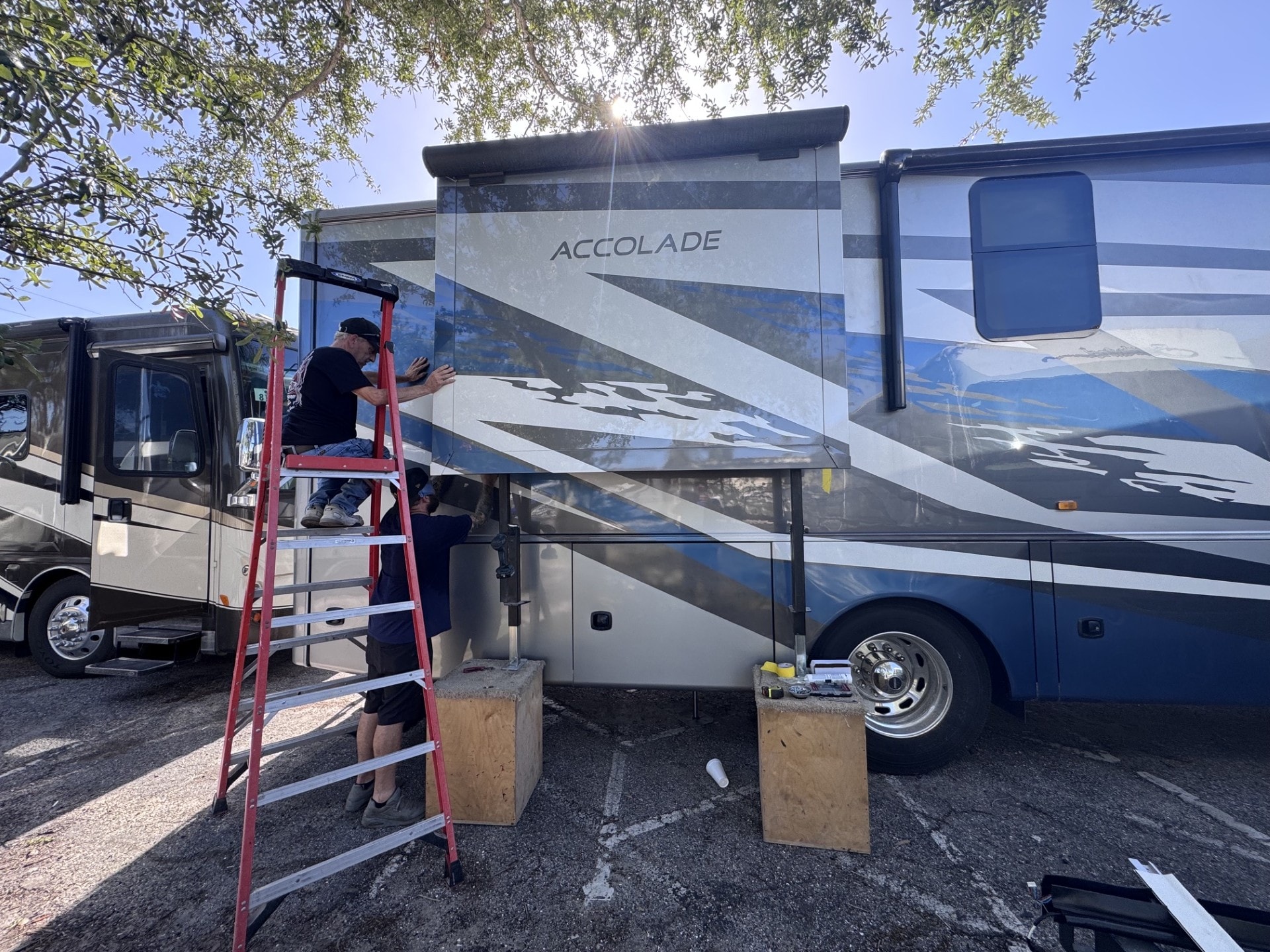
At EliteRV in Palmetto, our technicians are Lippert authorized. We see Lippert slide-out problems across every coach type and age, and we have the equipment to diagnose the full system — mechanical, electrical, and control board — rather than guessing at the cause and replacing parts until something works.
Preventive Maintenance: Keeping Your Lippert Slide Running
Most Lippert slide-out problems are preventable with routine maintenance. A few habits that make a significant difference:
Lubricate the slide mechanism regularly. The rack, rollers, and track need periodic lubrication — typically every three to six months for Florida owners who use their slides frequently. Use a product appropriate for the system type; Lippert recommends specific lubricants for Schwintek tracks that differ from what rack-and-pinion systems need.
Condition the seals. Rubber slide seals should be treated with a rubber conditioner at least twice a year. This keeps them pliable, extends their service life, and maintains their ability to seal against water intrusion.
Exercise the slide regularly. A slide that sits in one position for months — common for RVs in Florida storage — can develop stiff seals, corroded contacts, and motor issues from disuse. Cycling the room in and out every few weeks during storage keeps the system in working order.
Inspect for debris on the track. Before operating the slide, a quick visual check of the floor track for dirt, gravel, or objects prevents the kind of hard-stop failures that can damage gears and motors.
Schedule a Slide-Out Inspection at EliteRV
If your Lippert slide room is showing any of the symptoms described above — or if it has been more than a year since the system was serviced — a professional inspection is the right next step. Slide-out problems rarely resolve on their own, and the cost of a diagnostic visit is a fraction of what deferred maintenance typically leads to.
EliteRV serves RV owners throughout Palmetto, Sarasota, Bradenton, and the greater Tampa Bay area. Our Lippert-authorized technicians can diagnose and repair the full range of slide-out issues, from a simple lubrication service to a complete motor and control board replacement.
Visit our RV slide-out repair page for more on what we handle, or contact us to schedule a diagnostic appointment. We will give you a straight answer on what is wrong and what it will take to fix it correctly.