
RV Roof Sealant, Coating & Cleaner Guide: What Actually Works
EPDM sealant, TPO coating, rubber roof cleaner, lap sealant — the RV roof maintenance market is full of products that promise a lot and deliver inconsistently. Here is what actually works, what to skip, and when a coating is no longer enough.
Every RV owner eventually ends up on a ladder with a tube of lap sealant and a question: is this actually fixing anything, or am I just buying time?
The honest answer depends on what you are working with, how old the roof is, and what condition the membrane and seams are in. This guide covers the full spectrum — rubber roof cleaners, EPDM sealants, TPO coatings, lap sealants, and spray-applied systems — so you can make a decision based on your actual situation rather than whatever the hardware store had on the shelf.
The Four Main RV Roof Types
Before you buy any product, you need to know what your roof is made of. Using the wrong cleaner or sealant on the wrong membrane can cause more damage than doing nothing.
EPDM (Ethylene Propylene Diene Monomer) — The most common RV roof material. It is a synthetic rubber membrane, typically white or gray, with a slightly textured surface. EPDM is flexible, UV-resistant when new, and relatively inexpensive to install. Its weakness is the seams: every edge, vent, skylight, and AC unit requires lap sealant, and those sealant lines need annual inspection and reapplication.
TPO (Thermoplastic Polyolefin) — A white, heat-weldable membrane that has become more common on newer RVs. TPO is more resistant to UV and chemical exposure than EPDM, and its seams are heat-welded rather than glued, which makes them more durable. However, TPO can become brittle in cold climates and is more difficult to repair in the field.
Fiberglass — Found on higher-end motorhomes and some fifth wheels. Fiberglass roofs are rigid, durable, and do not require the same membrane maintenance as rubber roofs. They are not immune to cracking around penetrations, but the maintenance profile is very different.
Aluminum — Older RVs and some trailers use corrugated or flat aluminum roofing. Aluminum does not rot, but it can develop leaks at seams and fastener points, and it conducts heat aggressively.
RV Roof Cleaners: What to Use and What to Avoid
EPDM Rubber Roof Cleaners
EPDM requires a dedicated rubber roof cleaner — not dish soap, not bleach, not a pressure washer. Petroleum-based cleaners will degrade the membrane. Bleach can dry out and crack the rubber over time. High-pressure washing can lift seams and force water under the membrane.
What works: Dicor Rubber Roof Cleaner, Camco Pro-Strength Rubber Roof Cleaner, and similar products formulated specifically for EPDM. These are pH-balanced, non-petroleum, and safe for the membrane. Apply with a soft brush or mop, rinse thoroughly, and let the roof dry completely before applying any sealant or coating.
Cleaning frequency: Every 90 days is the manufacturer recommendation for most EPDM roofs. In Florida, where UV exposure and organic growth (mold, algae, mildew) are accelerated, quarterly cleaning is not optional — it is the minimum.
TPO Roof Cleaners
TPO is less sensitive than EPDM but still benefits from a dedicated cleaner. Most EPDM cleaners are safe for TPO, but check the label. Avoid abrasive scrubbing pads, which can scratch the surface and reduce UV reflectivity.
Fiberglass and Aluminum
Mild soap and water work for most fiberglass roofs. Aluminum can tolerate more aggressive cleaning but watch for oxidation — a dedicated aluminum cleaner and a light polish will restore reflectivity and protect the surface.
RV Roof Sealants: Lap Sealant vs. Seam Tape vs. Liquid Sealant
Lap Sealant
Lap sealant is the most common RV roof maintenance product. It is applied around the perimeter of the roof, at every penetration (vents, skylights, AC units, antennas), and wherever two surfaces meet. On an EPDM roof, lap sealant is the primary defense against water intrusion — and it is also the first thing to fail.
Self-leveling vs. non-sag: Self-leveling lap sealant is designed for horizontal surfaces and flows into gaps and low spots. Non-sag (also called non-leveling) is for vertical surfaces and edges where you need the sealant to stay in place. Using the wrong type in the wrong location is a common mistake.
Compatibility: EPDM roofs require a sealant that is compatible with rubber — Dicor 501LSW (self-leveling) and 502LSW (non-sag) are the industry standard. Do not use silicone-based sealants on EPDM — they do not bond properly and will peel.
Inspection schedule: Lap sealant should be inspected every six months and replaced whenever you see cracking, lifting, or separation. In Florida's climate, annual full replacement of all lap sealant is a reasonable baseline. A tube of sealant costs $15. A water damage repair costs $5,000–$20,000.
Seam Tape
Butyl seam tape is used to reinforce seams and transitions, particularly on EPDM roofs. It is not a substitute for lap sealant but works well as a secondary layer over a freshly sealed seam. Eternabond tape is a popular option — it bonds aggressively and is UV-stable.
Liquid Roof Sealants
Products like Liquid Roof (EPDM-based) and similar liquid-applied sealants can be brushed or rolled onto the entire roof surface. They are marketed as a way to extend the life of an aging rubber roof by adding a fresh protective layer.
The honest assessment: Liquid roof sealants can buy time on a roof that is in decent condition — no active leaks, no soft spots, seams still intact. They are not a substitute for a new roof on a membrane that is cracked, shrinking, or delaminating. If the underlying membrane has failed, a liquid coating will not hold.
RV Roof Coatings: What They Are and What They Are Not
"RV roof coating" is a broad term that covers everything from thin elastomeric paints to thick spray-applied systems. The category is worth breaking down carefully because the products at opposite ends of the spectrum are not remotely comparable.
Elastomeric Roof Coatings
Elastomeric coatings are thick, paint-like products that are rolled or brushed onto the roof surface. They add UV protection, improve reflectivity, and can seal minor surface cracks. Common brands include Kool Seal, Henry, and similar products available at home improvement stores.
What they do well: Extend the life of a roof that is structurally sound but showing surface wear. Improve energy efficiency by reflecting heat. Relatively inexpensive and DIY-friendly.
What they do not do: Fix seam failures. Repair delamination. Stop an active leak. Substitute for a new membrane on a roof that has reached end of life. An elastomeric coating applied over a failing EPDM roof will crack and peel as the membrane beneath it continues to deteriorate.
Spray-Applied Polyurea Systems
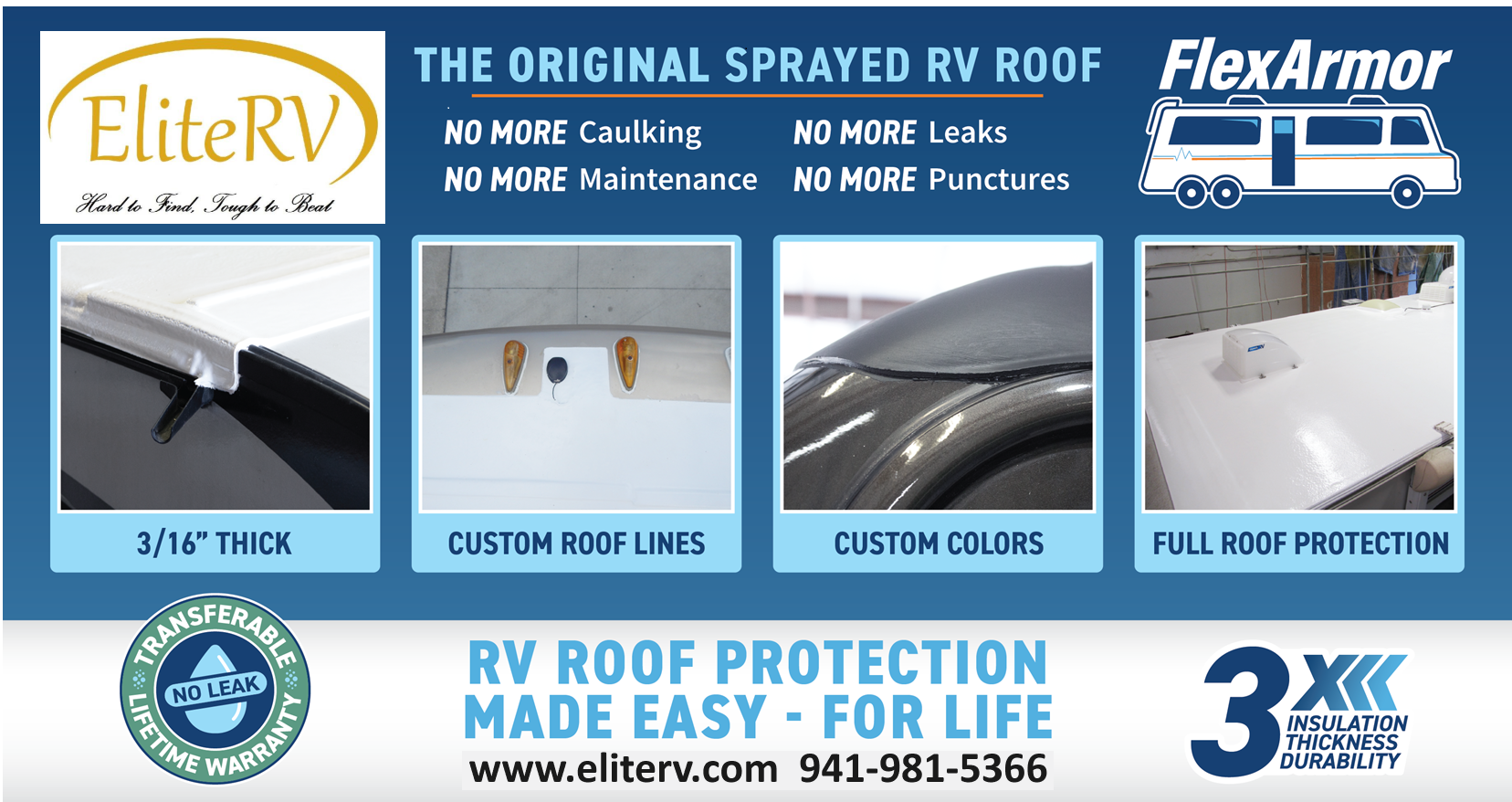
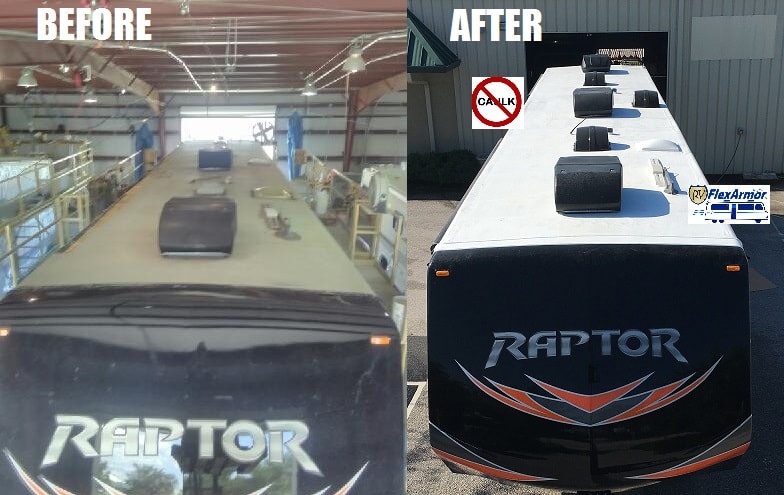
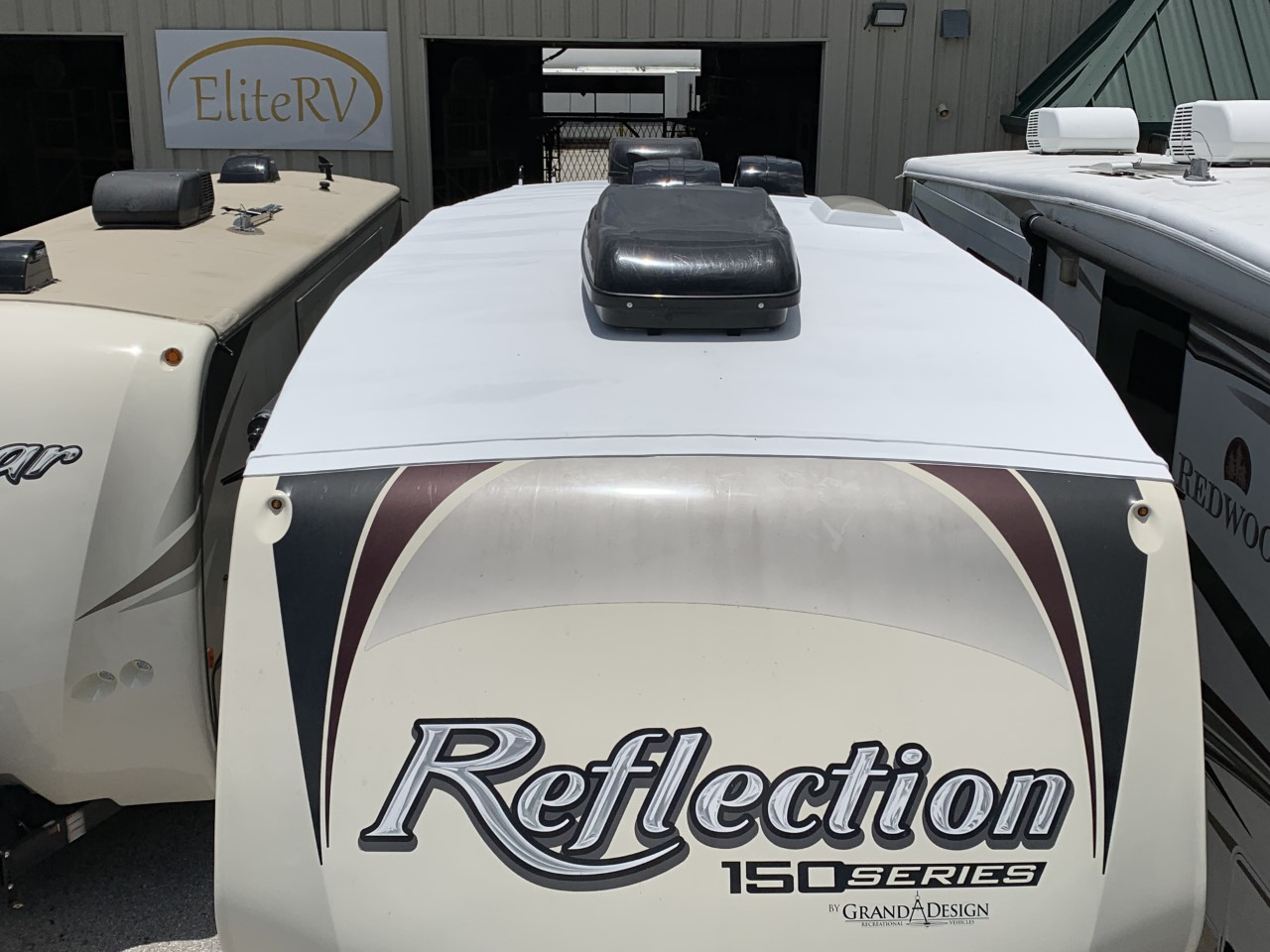
At the other end of the spectrum is spray-applied polyurea — the technology behind FlexArmor, the system we install at EliteRV. This is not a coating in the traditional sense. It is a complete roof replacement system that bonds directly to the substrate and cures into a single seamless shell.
The key differences from elastomeric coatings:
- No seams. The entire roof — including all penetrations — is encapsulated in a single continuous layer. There is nothing to crack, lift, or separate.
- Thickness. FlexArmor is applied at a thickness that is orders of magnitude greater than an elastomeric coating. It is structural, not cosmetic.
- Permanence. FlexArmor carries a lifetime warranty and requires no maintenance. No annual resealing. No lap sealant. No cleaning schedule beyond a basic wash.
- Authorized installation required. Unlike a roll-on coating, FlexArmor requires certified applicators and specialized spray equipment. EliteRV is the only authorized FlexArmor installer serving the Palmetto, Bradenton, Sarasota, and Tampa Bay area.
If you are comparing elastomeric coatings to FlexArmor, you are comparing a maintenance product to a permanent solution. They are not in the same category.
When Sealant and Coating Are Enough — and When They Are Not
This is the question that matters most. Here is a practical framework:
Sealant and coating are appropriate when:
- The membrane is structurally intact — no cracks through the full thickness, no delamination from the substrate
- Seams are in good condition or showing only minor surface cracking
- There are no soft spots in the decking (no moisture has penetrated)
- The roof is less than 8–10 years old and has been maintained on schedule
- You are doing preventive maintenance, not responding to an active leak
You need a roof replacement when:
- There are active leaks that have not responded to sealant repair
- The membrane is cracking through its full thickness (not just surface crazing)
- Seams are lifting, separating, or pulling away from the substrate
- There are soft spots in the decking — this means moisture is already inside
- The roof is 12+ years old and has not been maintained consistently
- You are seeing interior staining, ceiling damage, or wall delamination
A liquid coating or fresh lap sealant applied over a failing roof is not a repair — it is a delay. The water will find a way in, and by the time you see interior damage, the repair cost will be multiples of what a roof replacement would have cost.
The Florida Factor
Florida's climate is harder on RV roofs than almost anywhere else in the country. The combination of intense UV radiation, high humidity, frequent rain, and heat cycling accelerates every failure mode:
- UV degradation dries out EPDM and causes surface crazing within 3–5 years on an unmaintained roof
- Heat cycling causes the membrane to expand and contract repeatedly, stressing seams and adhesive bonds
- Humidity and organic growth — mold, algae, and mildew — break down sealant and can work under the membrane at seam edges
- Hurricane season brings wind-driven rain that exploits any gap in the seam system
The maintenance schedule that works in Arizona or the Pacific Northwest is not adequate in Florida. If you are keeping an EPDM roof in service in Southwest Florida, quarterly cleaning and annual full sealant inspection and replacement is the minimum. Anything less is accepting the risk of water damage.
For RV owners who are tired of the maintenance cycle — or who have already had one water damage event and do not want another — a permanent system like FlexArmor eliminates the maintenance obligation entirely. One installation, lifetime warranty, no annual sealant work.
Choosing the Right Product for Your Situation
| Situation | Recommended approach |
|---|---|
| Healthy EPDM roof, routine maintenance | Dedicated rubber roof cleaner + annual lap sealant inspection and replacement |
| EPDM roof with minor surface crazing, no leaks | Elastomeric coating + lap sealant refresh |
| EPDM roof with seam failures or active leaks | Professional inspection — likely needs membrane replacement |
| TPO roof, routine maintenance | TPO-compatible cleaner + seam inspection |
| Roof 10+ years old, Florida climate | Professional inspection before investing in any coating product |
| Tired of annual maintenance, want permanent solution | FlexArmor spray-applied polyurea system |
What to Expect from a Professional Roof Inspection
If you are not sure what condition your roof is in, a professional inspection is the right starting point before spending money on any product. A thorough inspection covers:
- Full membrane condition assessment — surface crazing, cracks, delamination
- Seam inspection at all edges and penetrations
- Decking probe for soft spots indicating moisture intrusion
- Interior inspection for staining, ceiling damage, or wall separation
- Recommendation: maintain, coat, or replace
At EliteRV, we inspect roofs as part of our standard service intake. If you are in the Palmetto, Bradenton, Sarasota, or Tampa Bay area and want an honest assessment of your roof's condition, contact us or call (941) 981-5366.
For a deeper look at the FlexArmor system and what the installation process involves, visit our RV roof services page. If you are in another part of Florida, our Florida RV roof page covers statewide service options and what to look for in an authorized installer near you.
EliteRV Palmetto is located at 1671 12th St East, Palmetto, FL 34221. We are the only authorized FlexArmor installer serving Manatee, Sarasota, Hillsborough, and Pinellas Counties.